

Taste of Time: The Story of a 1927 Tea Factory
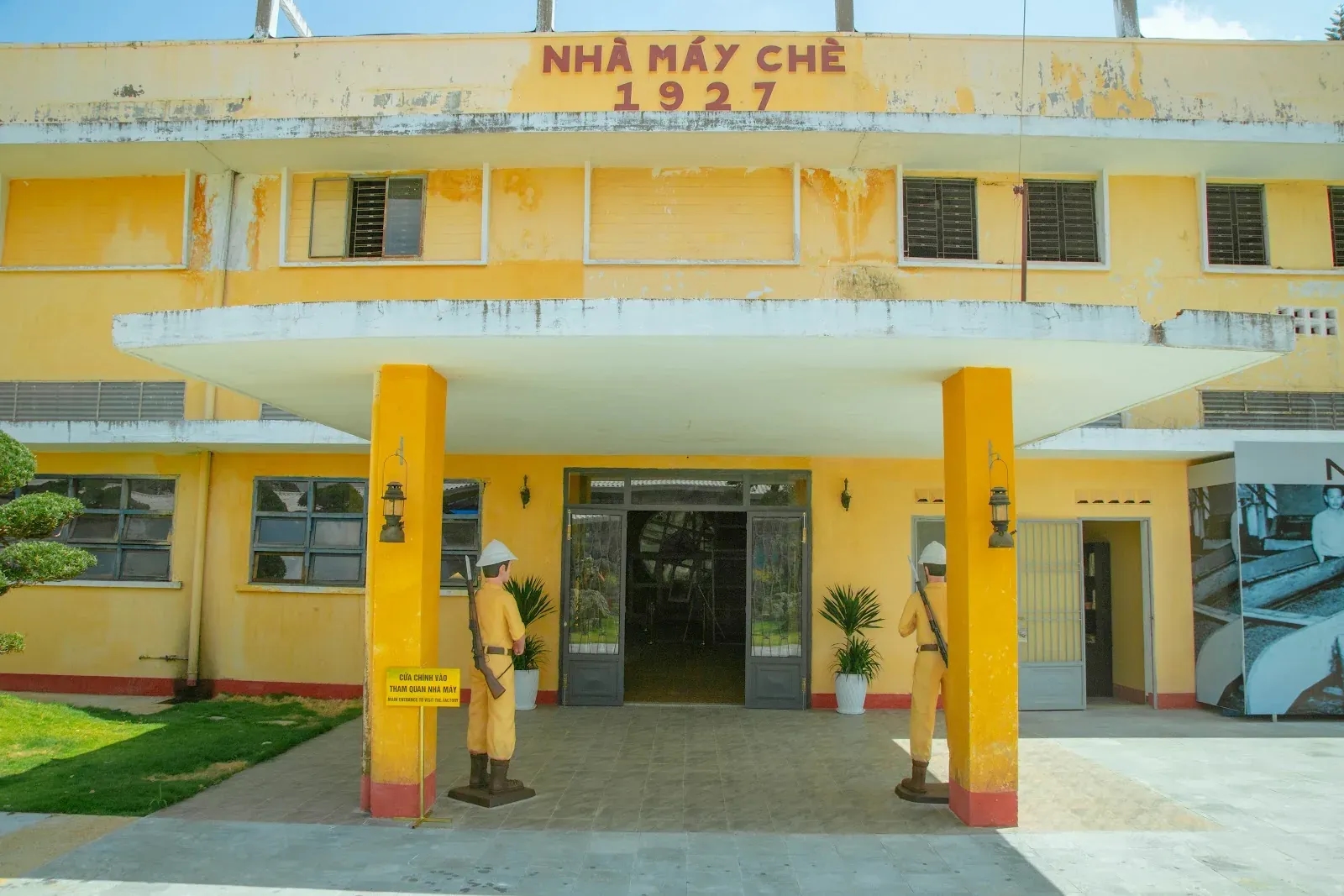

Step inside the 1927 Tea Factory in Bao Loc, where preserved machines, golden walls and the aroma of tea tell a story shared across generations, retold today in every cup.
Some places are meant to be looked at; others are meant to be listened to. The 1927 Tea Factory in Bao Loc, Lam Dong belongs to the second kind. Walk through the gate at 280 Tran Phu Street, Loc Son Ward, and it feels like opening an old book: the pages have yellowed, yet every line still carries the warmth of the people who wrote it.
A name tied to time
The number 1927 is more than a date to remember. It is a reminder that this place has walked alongside Vietnam's tea industry for nearly a century, through countless harvests and generations of tea makers. Set in a highland region long devoted to the tea plant, the factory is where fresh leaves from the surrounding hills were brought in and turned, by skilled hands and sturdy machines, into finished tea.
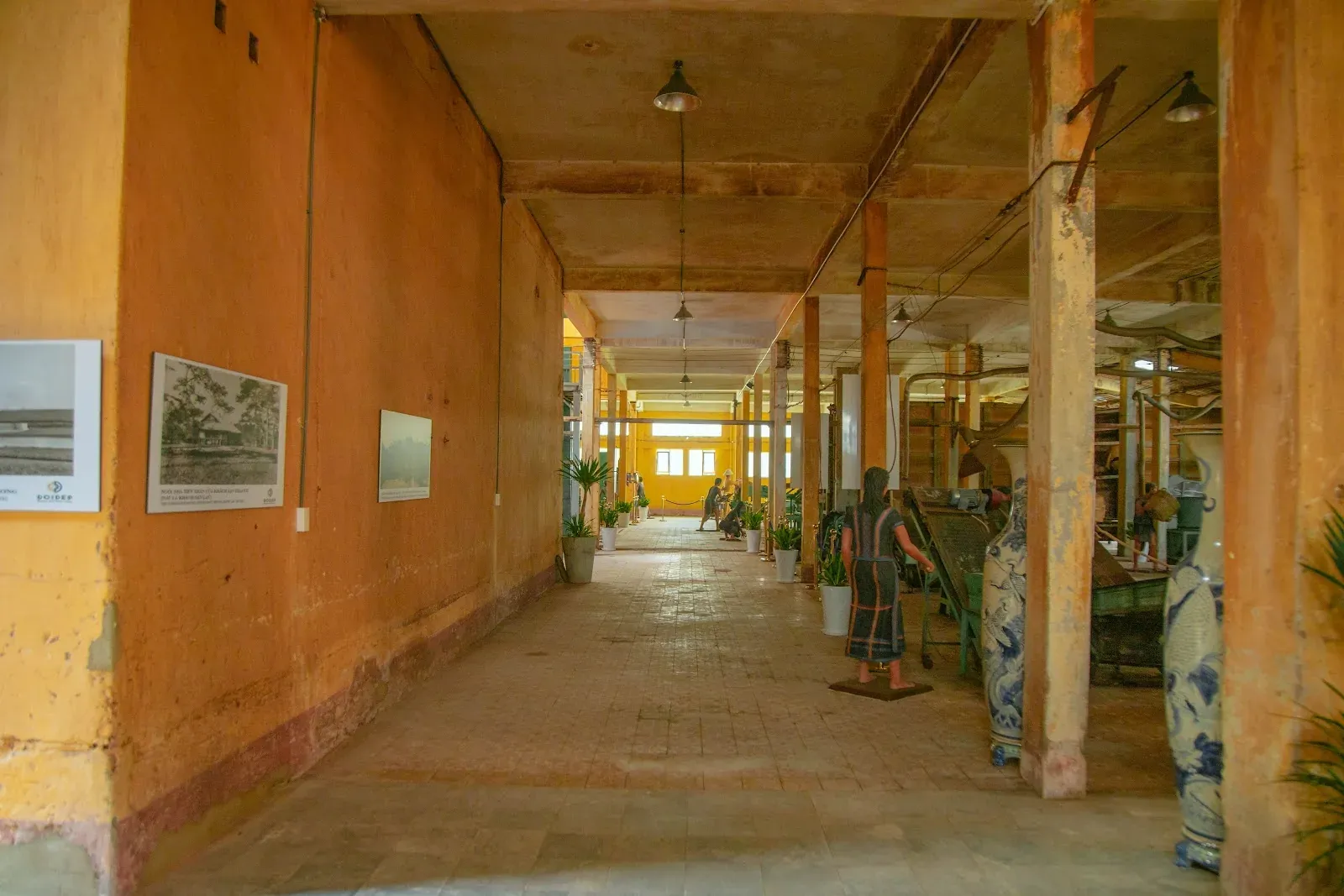
Today, the 1927 Tea Factory is part of the DOIDEP (Doi Dep) brand ecosystem of Lam Dong Tea Joint Stock Company. Rather than erasing the past to build something new, the factory chose to keep it: the golden walls, the rows of columns and the production lines marked by time, so that visitors can see a piece of tea-making history with their own eyes.
Machines that tell stories
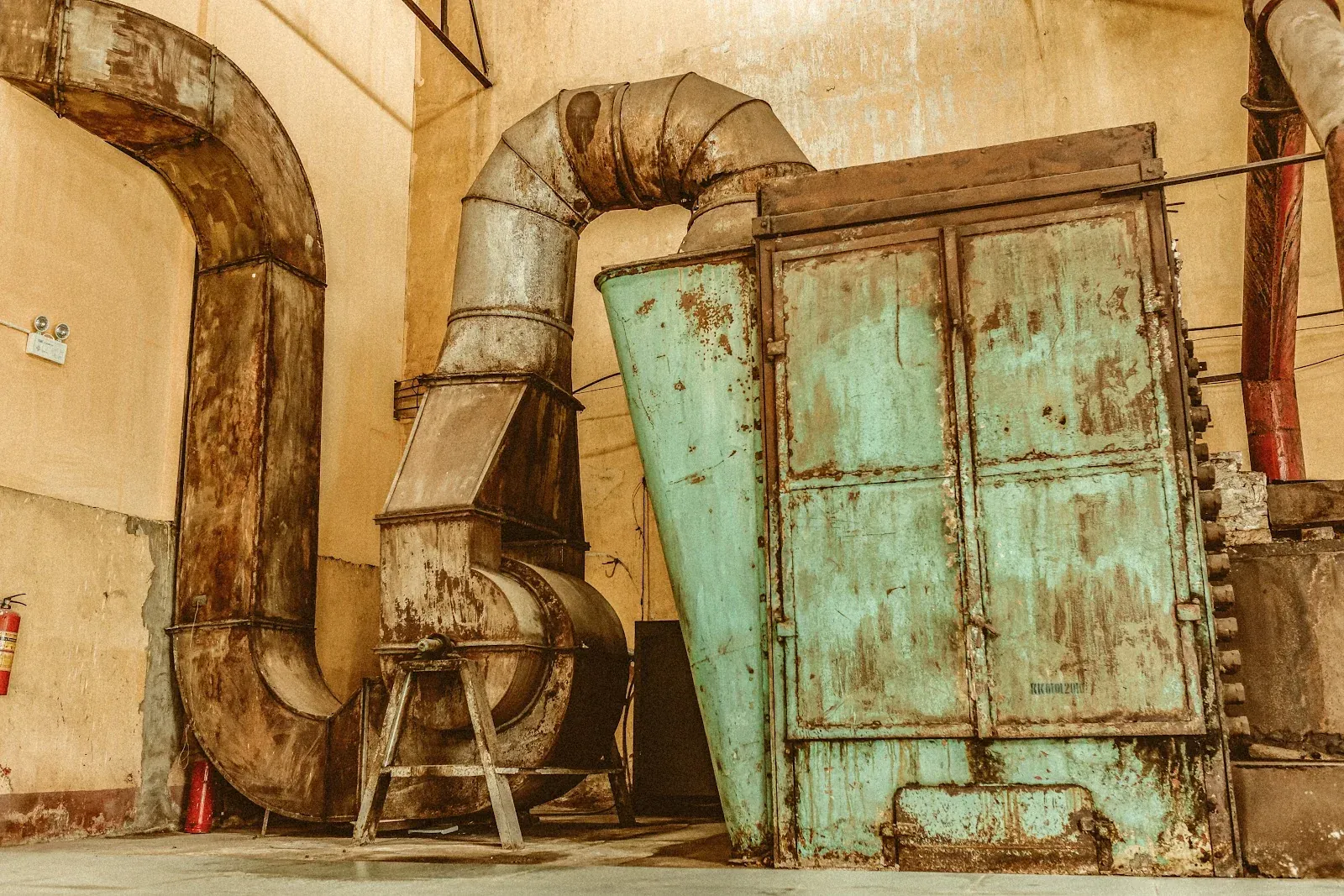
What surprises many visitors most is how much of the old factory has been preserved. Heat furnaces once used for withering, metal rolling machines, dryers and sorting machines stand in long rows beneath the high workshop roof. Peeling paint, patches of rust and temperature gauges with faded needles are all part of the handwriting of time.
Walking through the halls, you can picture the full journey of a tea leaf in the traditional method: fresh leaves are withered until supple, rolled until they twist and release their juices, left to ferment, then dried and sorted to select evenly shaped leaves. Nearby, an area dedicated to the modern process shows how tea making has evolved, while the care for quality remains unchanged.
From workshop to cultural space
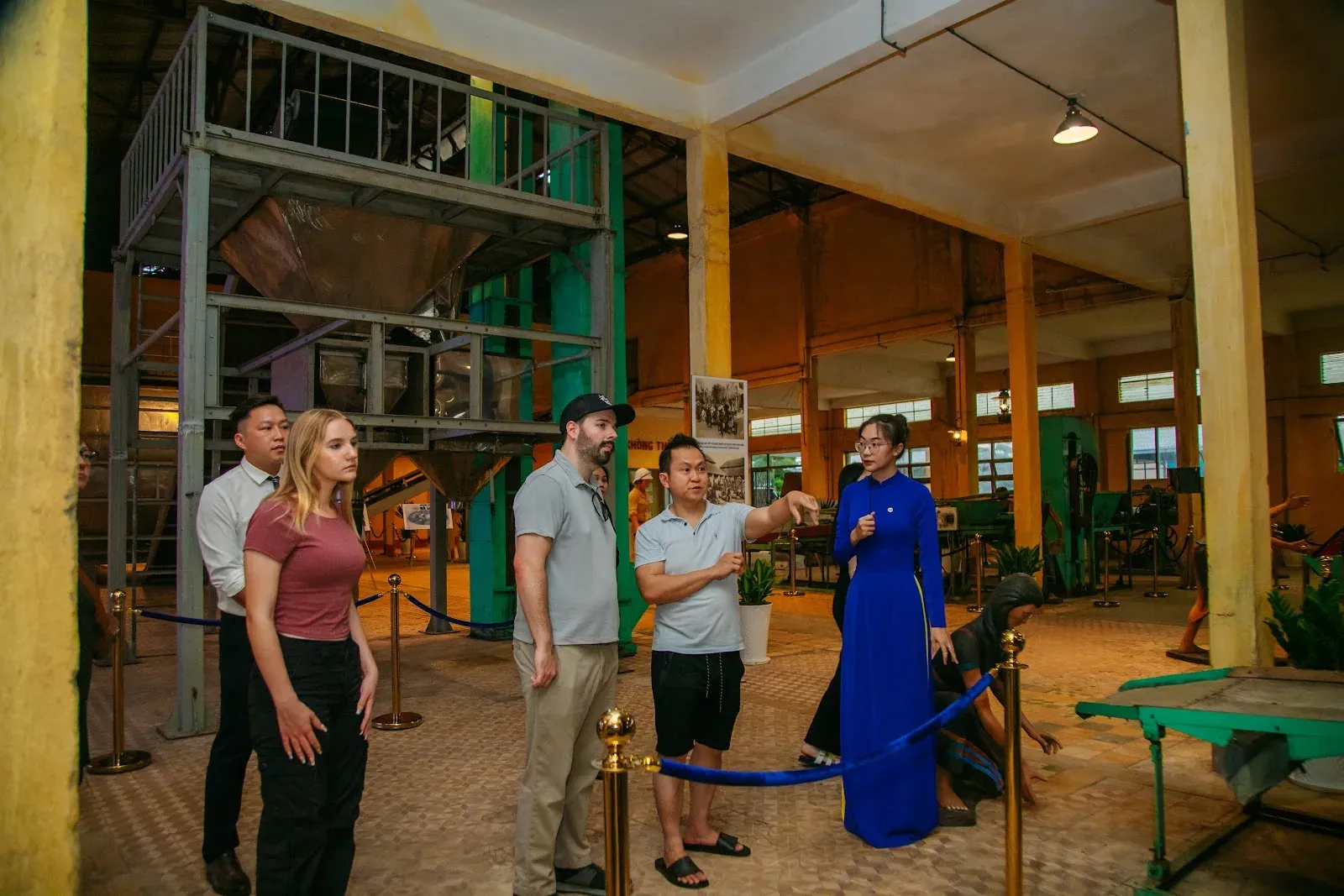
Today, the 1927 Tea Factory is far more than a home for old machinery. Historical paintings and illustrations of each tea-making stage line the walkways, telling the story in color: pickers at dawn, trays of withering leaves, a rolling machine turning steadily. Each painting invites you to pause and connect the details.
The story continues in the "Ngu Thuc Viet Tra" tea space, where guests are invited to sit down, slow down and enjoy a cup the Vietnamese way. The tea ware showroom, with its Bat Trang ceramic teapots and cups among many other pieces, offers a fresh perspective: enjoying tea is not only about drinking, but also about the craft of the vessels, the art of arrangement and the care behind every detail.
The factory has also hosted memorable cultural events. On September 22, 2024, the "Best Of Vietnam Exhibition - Ao Dai Show", part of Miss Cosmo 2024, took place here, bringing the old tea factory and Vietnamese culture closer to friends from around the world.
The taste of time
People often say good tea takes time: time for the plant to grow, for the buds to mature, for the leaves to be withered, fermented and dried just right. The story of the 1927 Tea Factory is much the same. Its value lies not in being new, but in what has been built up over the years: the experience of tea makers, a love for the tea plant and a commitment to preserving heritage.
A visit might begin with a walk among the old machines and end with a warm cup of tea in a quiet room. Between those two moments lies a whole journey, enough for each visitor to discover why a single cup can hold the "taste of time".
The 1927 Tea Factory – 280 Tran Phu Street, Loc Son Ward, Bao Loc, Lam Dong. Where Vietnamese tea heritage is preserved and retold, one cup at a time.
Relevant posts
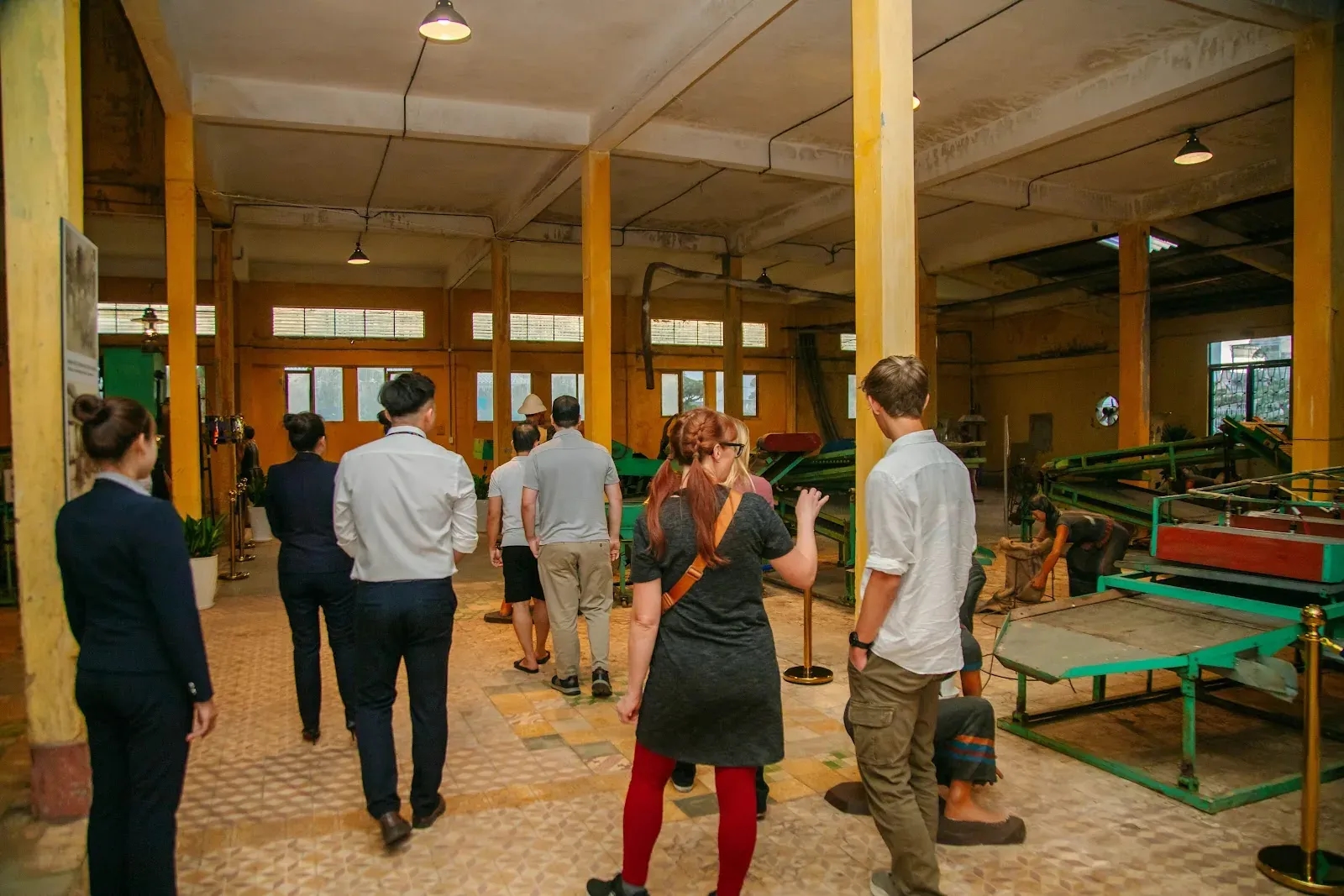
A Visitor's Guide to the Old Tea Factory in Bao Loc
What to bring, what to see and how to behave when visiting the 1927 Tea Factory: a practical guide to enjoying the historic workshops, the Ngu Thuc Viet Tra tea space and the teaware showroom.
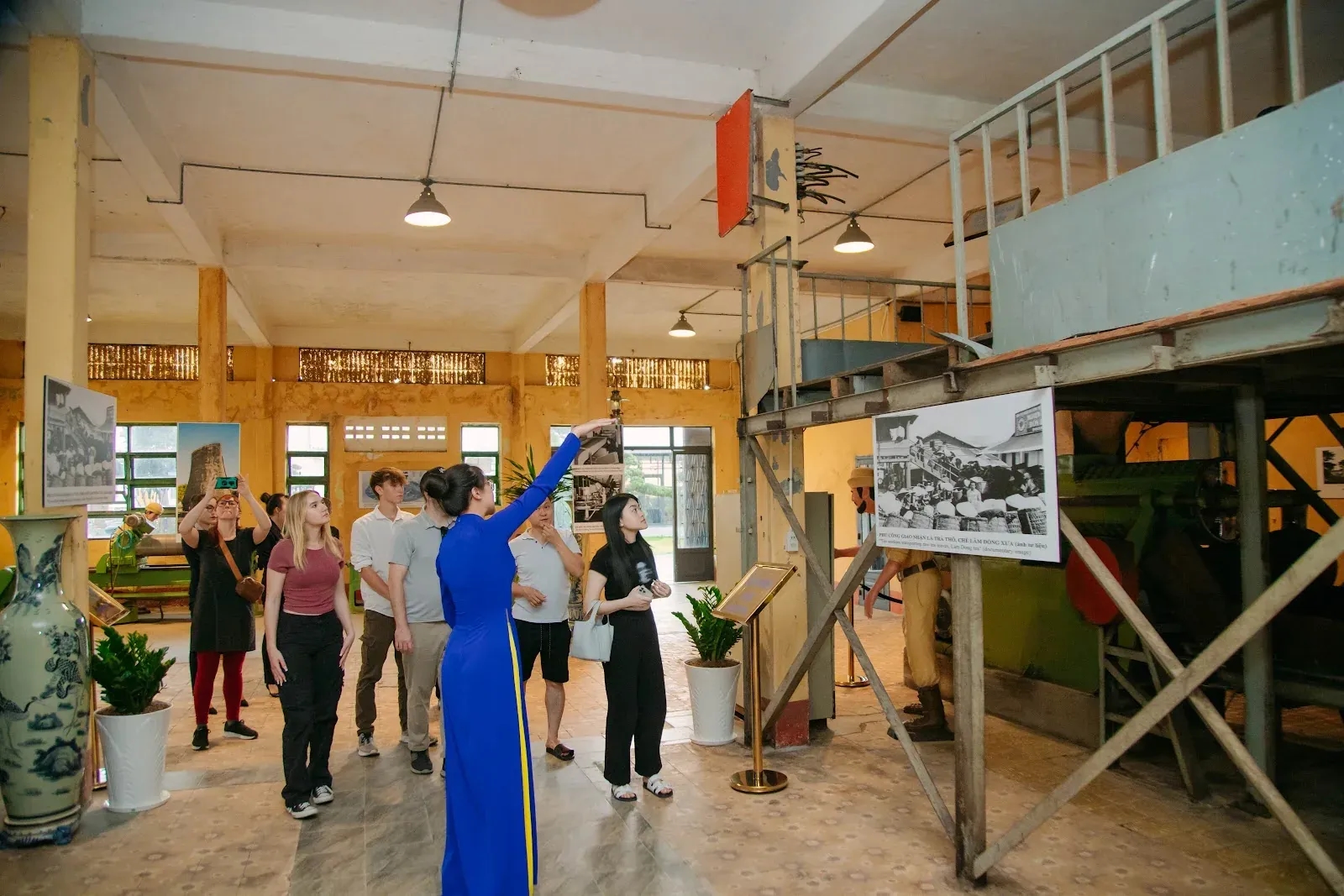
Reading History Through the Paintings of the 1927 Tea Factory
Beside the old machines, a series of illustrated paintings and black-and-white archive photos helps visitors picture the life of tea making. A few tips on reading them for a richer visit.
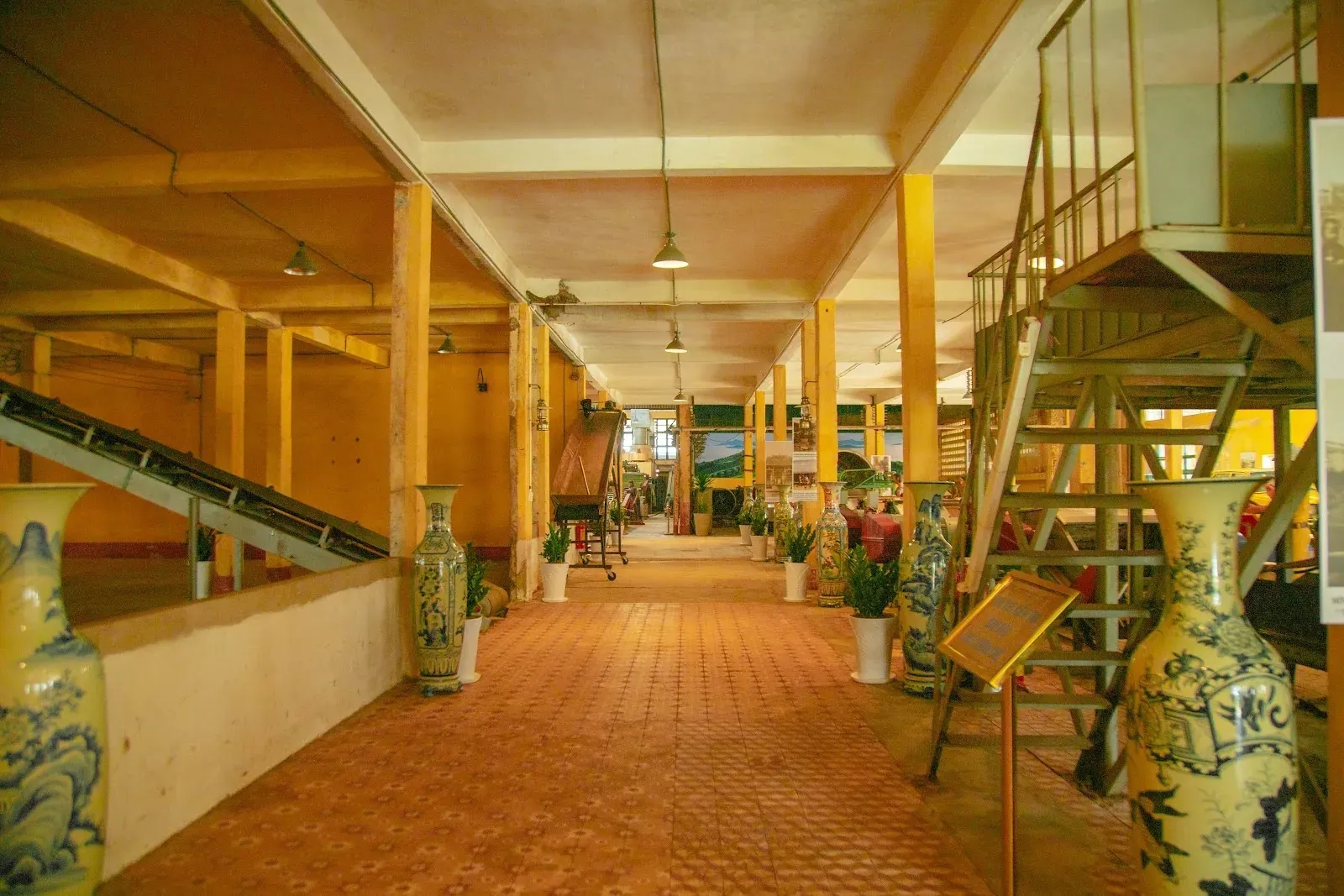
Architectural Memories of an Old Tea Factory
Warm ochre walls, tall columns, steel roof trusses and many-paned windows: the architecture of the 1927 Tea Factory tells the story of a tea-making era, preserved as a living memory.