
Reading History Through the Paintings of the 1927 Tea Factory
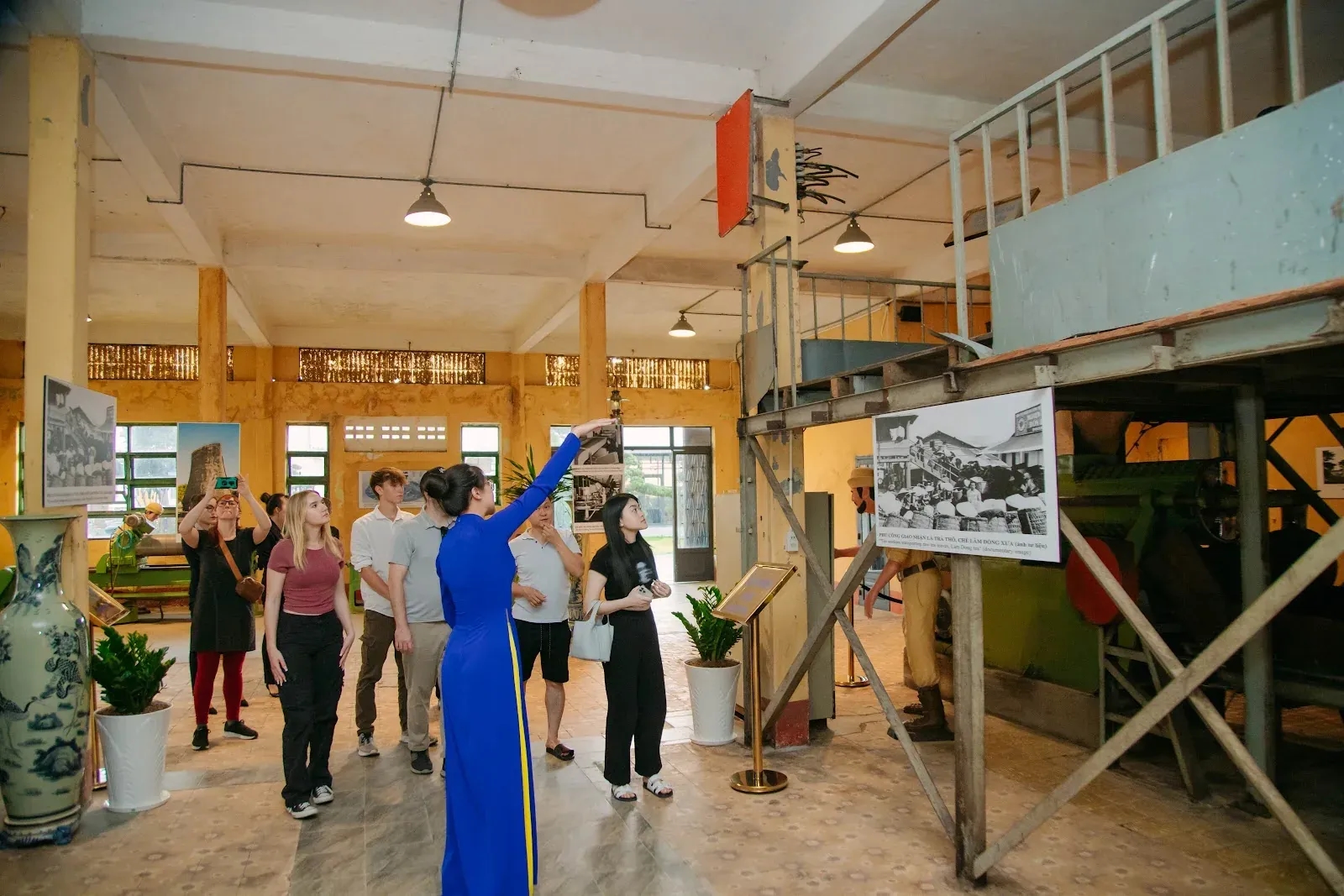

Beside the old machines, a series of illustrated paintings and black-and-white archive photos helps visitors picture the life of tea making. A few tips on reading them for a richer visit.
An old machine can impress us with its size and weathered look, but not everyone can imagine how people once worked beside it. That is where the paintings speak up. Inside the 1927 Tea Factory in Bao Loc, alongside the preserved machinery, visitors find a series of illustrated paintings and black-and-white archive photographs. They are quiet storytellers, linking past and present.
A nostalgic illustrative style
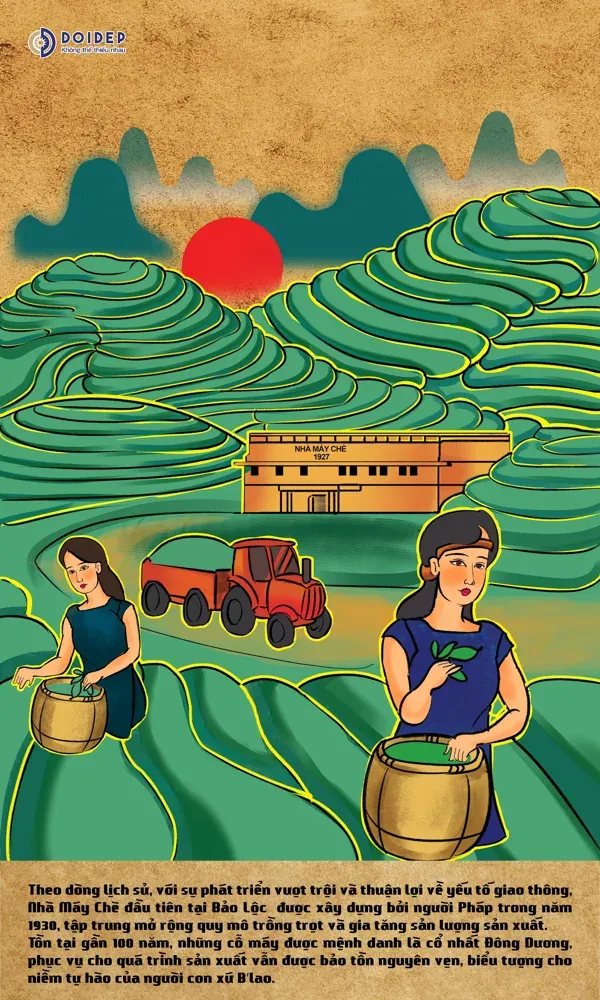
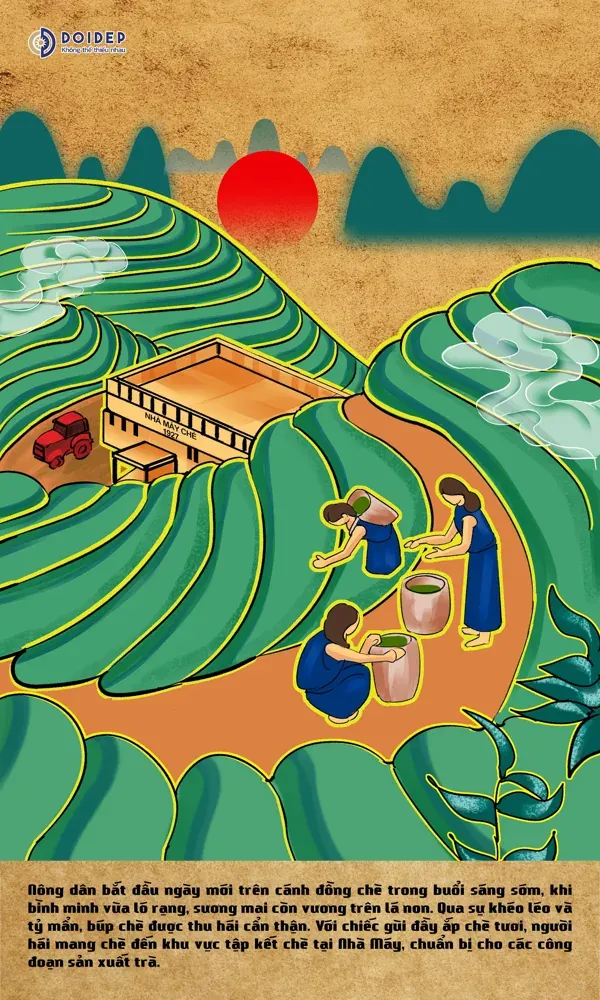
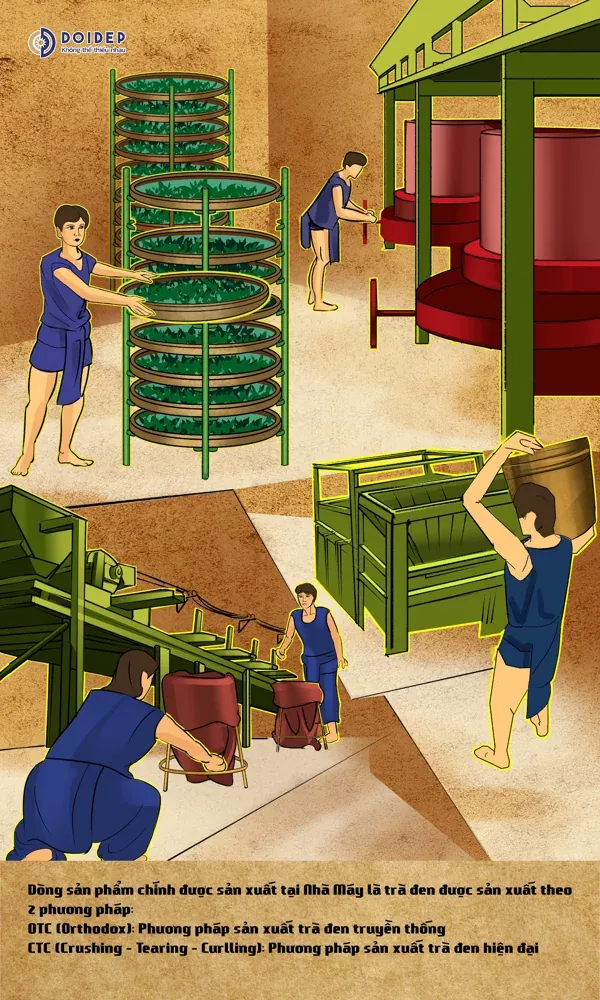
The paintings are drawn in an illustrative style with a warm palette. Their backgrounds have the brownish-gold tone of old paper, dotted with rolling green tea hills, stylised clouds and a red sun. The figures are tea pickers and workers in simple working clothes, captured mid-task: bending to pick buds, spreading leaves on racks, pushing carts, tending furnaces.
Each painting usually comes with a short caption explaining what it shows. Pairing image and text gives the paintings both artistic value and an accessible way in for children and first-time visitors learning about tea.
From the hills to the factory floor
You can read the series like a large-format picture book telling the journey of the tea leaf. It opens on the hills, where pickers with baskets move between the rows. Then come the stages inside the factory: withering, rolling, oxidation, drying, sorting and fibre removal, cutting. Some panels set traditional and modern methods side by side, showing how tea making has changed over time.
Black-and-white photos: slices of reality
If the illustrations bring emotion, the black-and-white photographs bring authenticity. Displayed on stands, on the walls or right next to the machines, they record the workshops, the workers and scenes from earlier days. Standing before an old photo and then turning to see the same machine in real life, visitors feel time folding in on itself, past and present sharing a single moment.
Paintings help us feel, photographs help us believe, and the real machines let us touch. Together, these three layers make the story of tea complete.
Tips for a deeper look
- Match the painting to the object: when you see the panel on rolling, find the rolling machine nearby and compare. You will understand why it was built the way it was.
- Watch the gestures: the way a worker holds a shovel, spreads leaves or leans over a machine reveals the effort and care the work required.
- Follow the colours: the green of fresh leaves shifts towards reddish brown in the panels on oxidation and drying, mirroring what really happens to the leaf.
- Read the captions: the short texts beneath the paintings often hold interesting details about each stage.
- Ask the guide: the factory's guides can share stories the paintings leave untold.
Why paintings matter to industrial heritage
An old factory can keep its machines, but it cannot keep the sound of voices, the scent of withering leaves or the rhythm of a working shift. Paintings and archive photos fill that gap. They turn an industrial space into a cultural one, where visitors learn not only about technique but also about the people behind every batch of tea.
For heritage tourism, this is also a way to reach more people. Children love the colours, older visitors find their memories, and international guests can follow the journey of Vietnamese tea without needing technical knowledge.
When you visit the 1927 Tea Factory, do not hurry past the paintings. Pause for a few minutes in front of each one and let the brushstrokes carry you back to the tea hills, the workshops and the people who created the flavour of Bao Loc tea.
Relevant posts
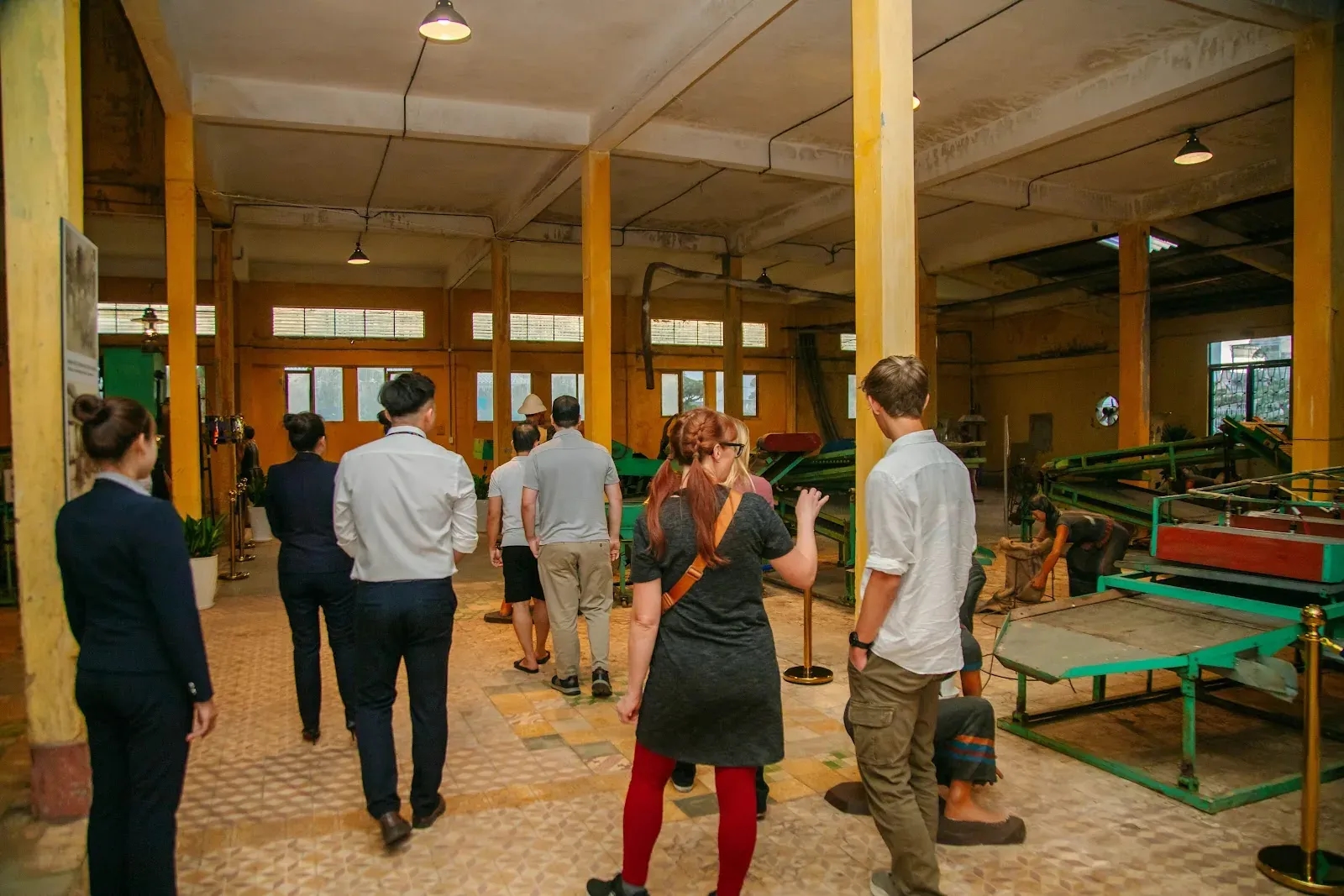
A Visitor's Guide to the Old Tea Factory in Bao Loc
What to bring, what to see and how to behave when visiting the 1927 Tea Factory: a practical guide to enjoying the historic workshops, the Ngu Thuc Viet Tra tea space and the teaware showroom.
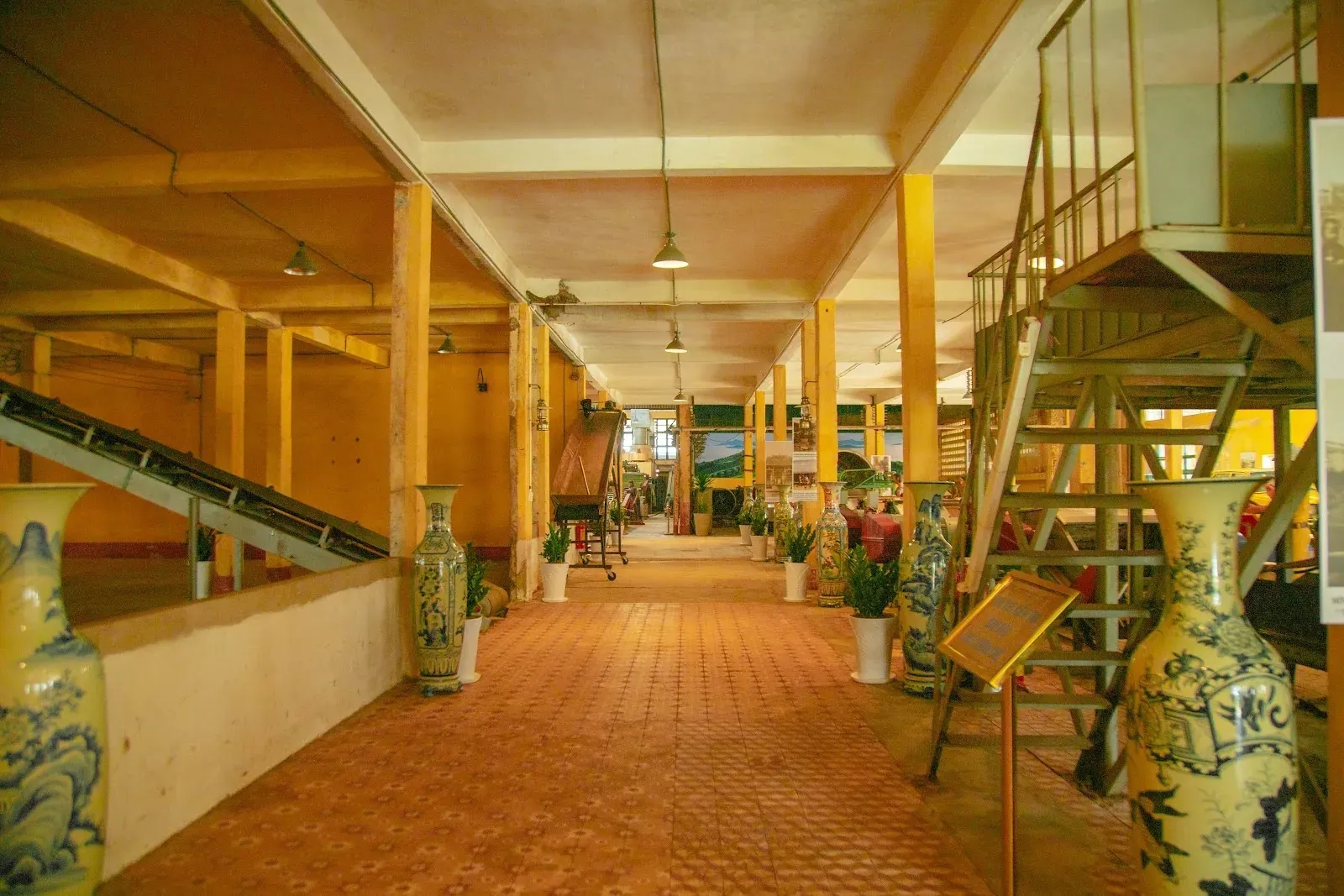
Architectural Memories of an Old Tea Factory
Warm ochre walls, tall columns, steel roof trusses and many-paned windows: the architecture of the 1927 Tea Factory tells the story of a tea-making era, preserved as a living memory.
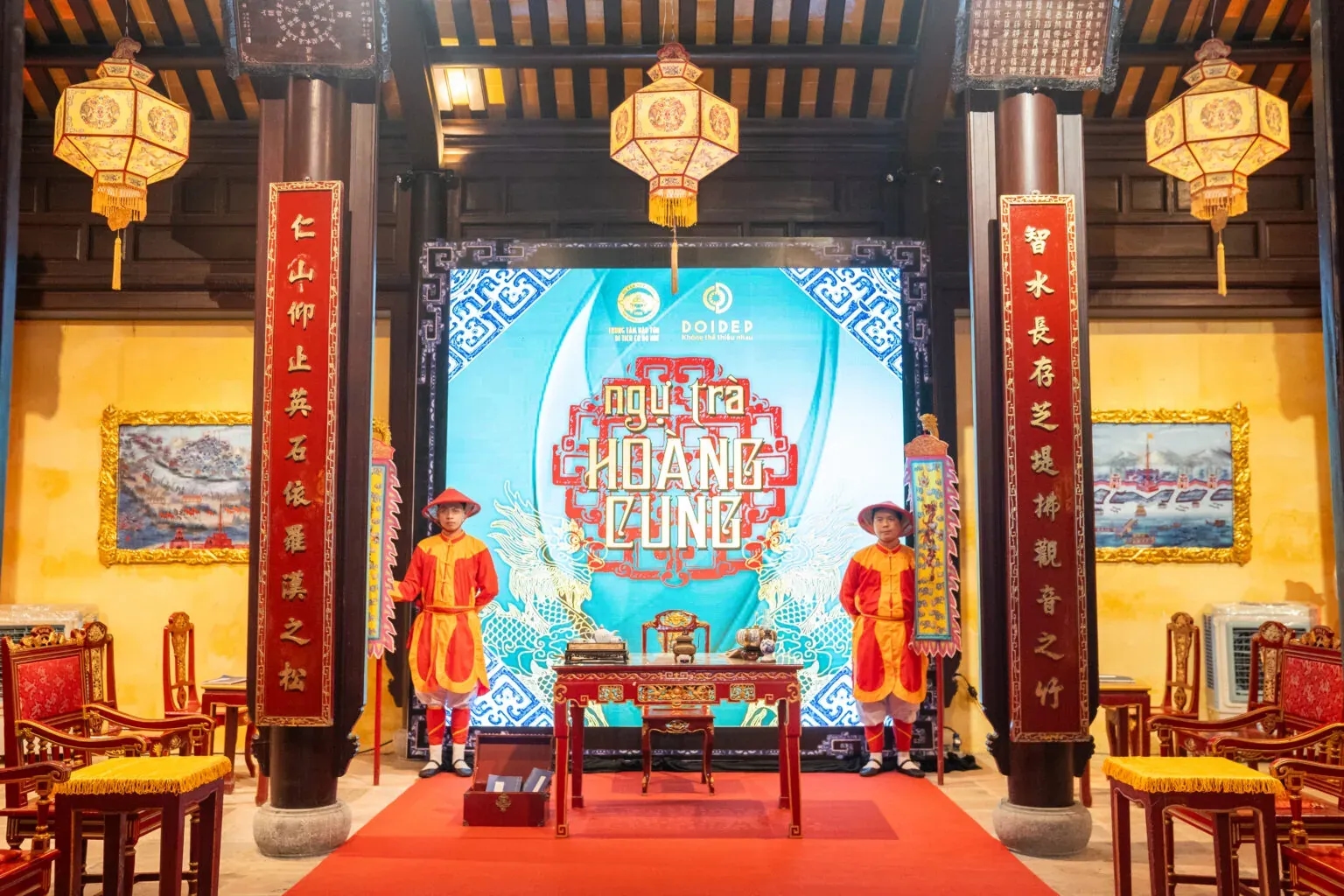
The Imperial Royal Tea Ritual in Vietnamese Culture
At Festival Hue 2025, the Hue Monuments Conservation Center and the Doi Dep brand restored the Imperial Royal Tea ritual, recreating the refined tea-enjoyment tradition of Vietnam's kings and lords of old.