
Architectural Memories of an Old Tea Factory
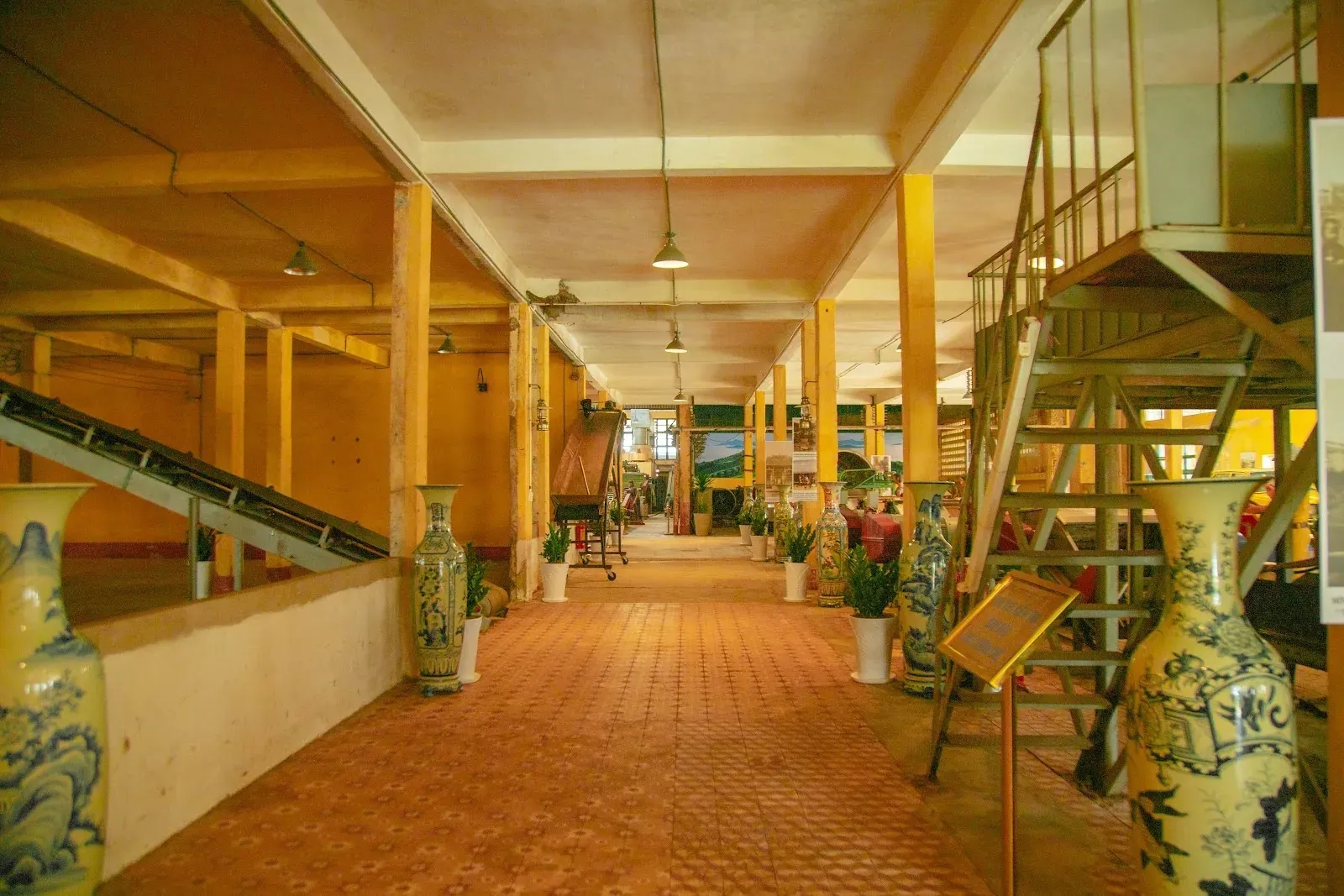

Warm ochre walls, tall columns, steel roof trusses and many-paned windows: the architecture of the 1927 Tea Factory tells the story of a tea-making era, preserved as a living memory.
Some buildings are made to be admired; others are made to work. The 1927 Tea Factory in Bao Loc belongs to the second kind. Yet precisely because it was born for work, its walls and columns hold so many memories. Step inside today and you see more than an old space: you can read a whole way of thinking, a whole way of making tea, imprinted on the architecture.
A plain facade with quiet pride
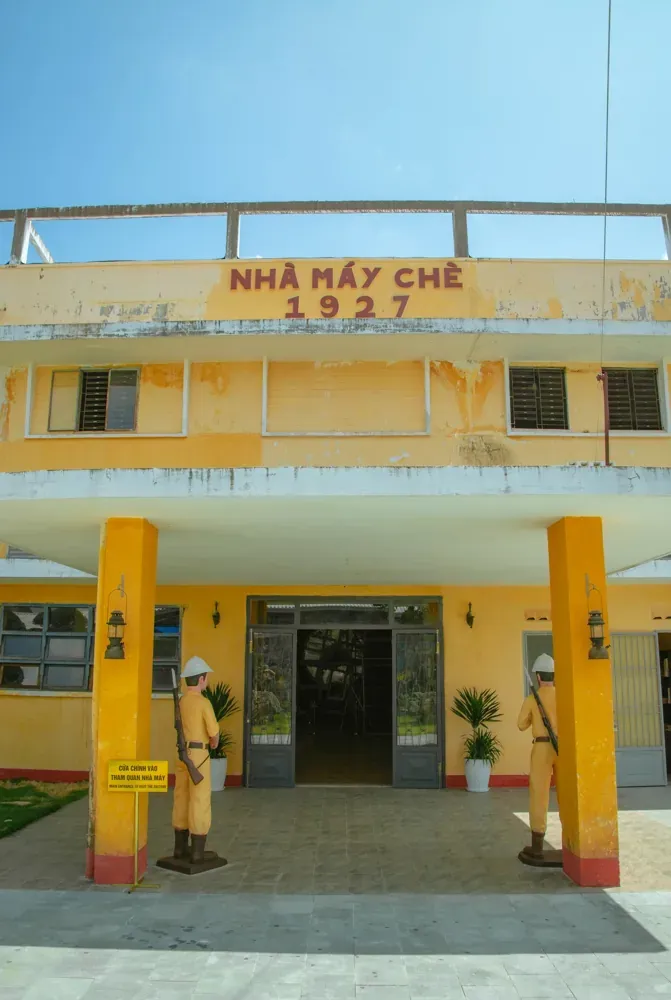
The first impression is a warm ochre facade, the factory's name standing out in large letters above it. There is no elaborate ornament. The front is built from strong, simple lines: square columns, a canopy over the entrance, rows of evenly spaced windows. It carries the spirit of an industrial building: solid, clear and made to last.
A space shaped by the flow of the leaf
Inside, what strikes you first are the long, high-ceilinged, airy workshops. A tea factory needs room to arrange its machines in sequence, from withering to rolling, oxidation, drying and sorting. The halls therefore follow one another like a current, and walking through the factory means following the journey of the tea leaf itself.
Sloping conveyors, staircases and small steel platforms leading up to the machines are traces of that production logic. They were never designed to be beautiful, yet today they form striking lines that make many visitors pause, look and take a photograph.
Light and air, the silent workers
In industrial buildings of earlier times, daylight and ventilation mattered enormously. At the 1927 Tea Factory, large windows divided into many small panes run along the walls, spreading light evenly across the floor. High ceilings and steel roof trusses keep air moving and give the heat from furnaces and dryers somewhere to go. Stand in the hall on a morning and you will see slanting beams of sunlight falling across the floor and the machines, a scene both venerable and warm.
The beauty of time
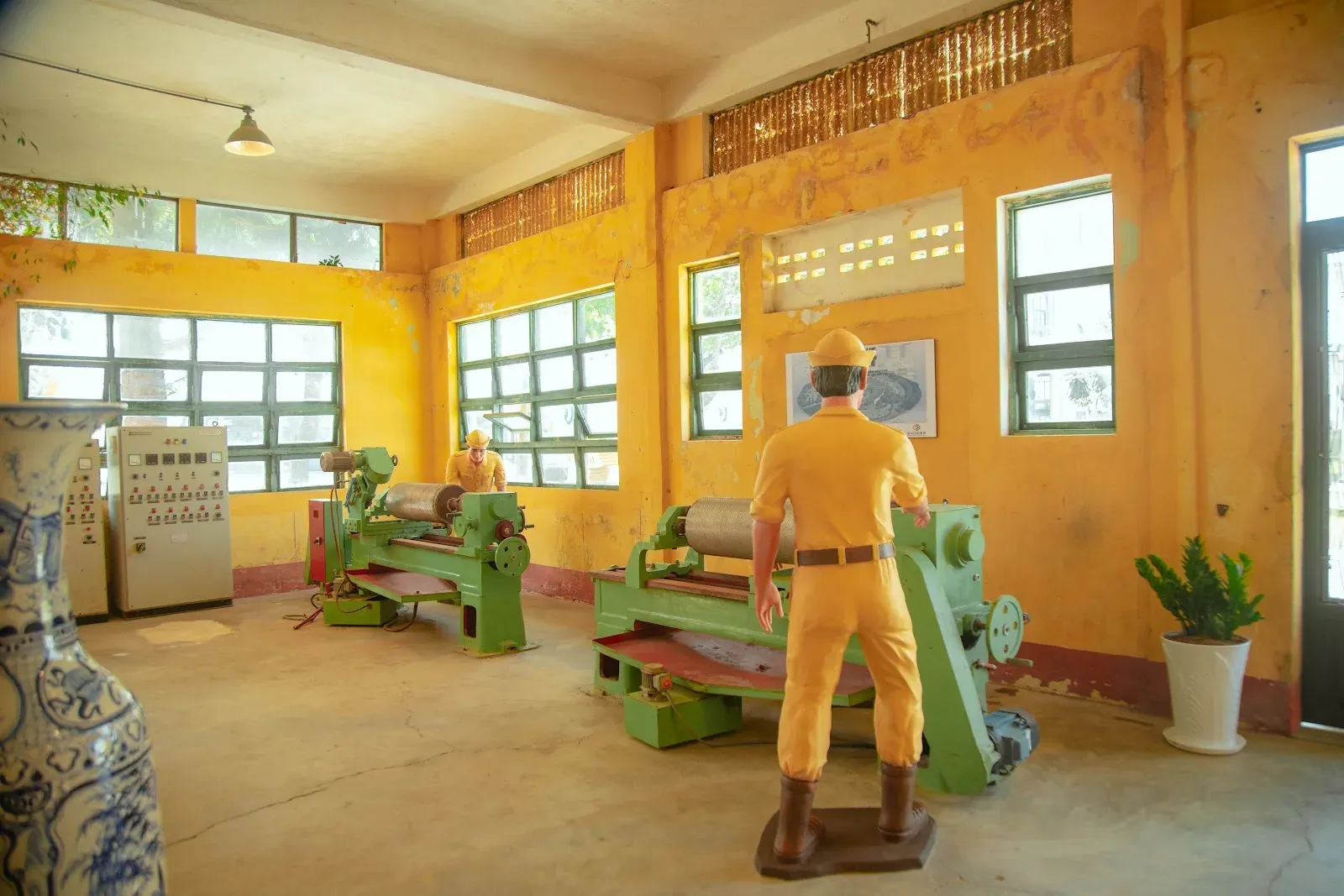
The factory's particular charm lies not in novelty but in its patina, the marks left by time. Faded walls, peeling paint on the machines, rust on furnace doors, old switch boxes and gauges have all been kept rather than painted over. This approach lets visitors sense the years when the factory was running, almost as if they could touch a page of history with their eyes.
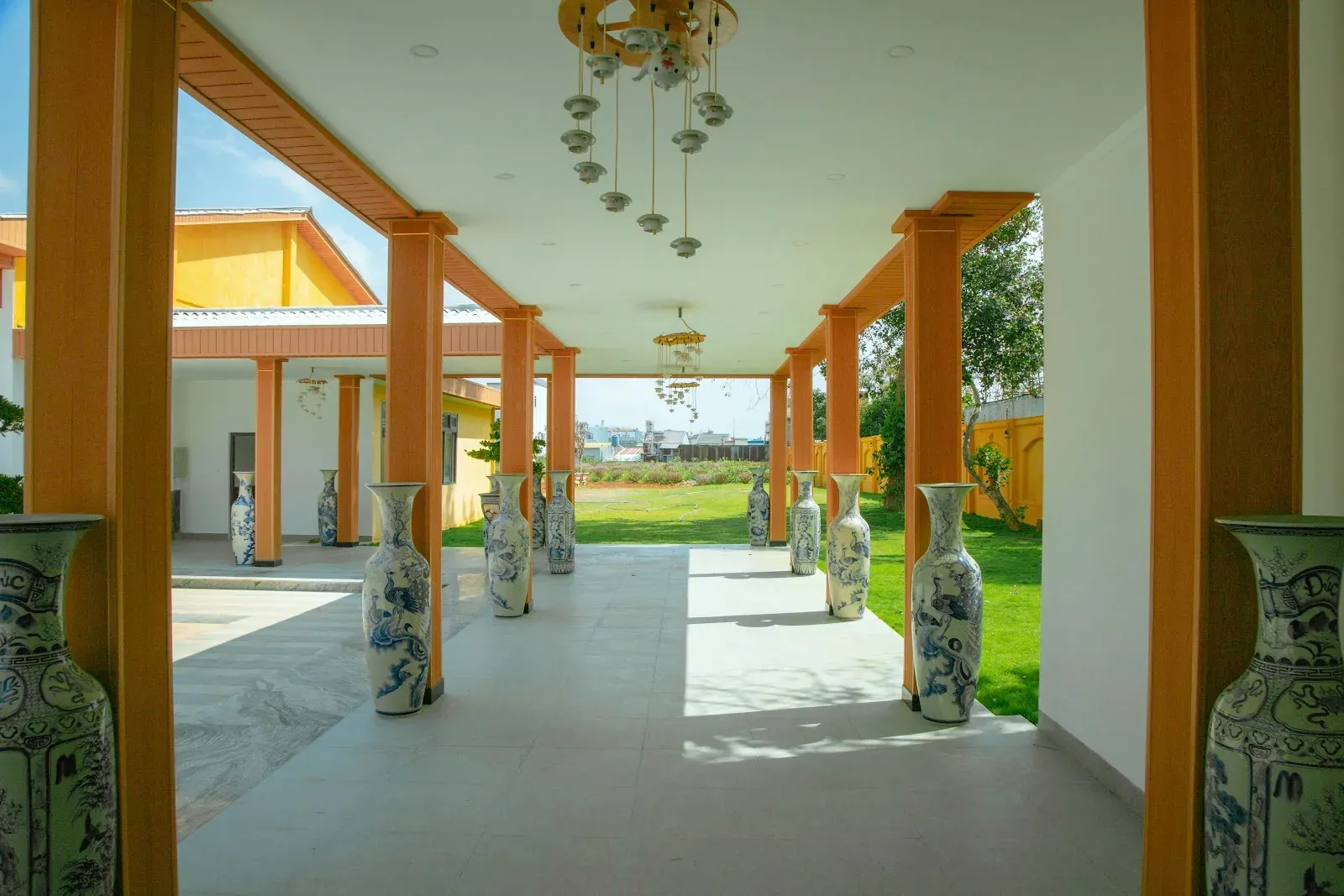
Alongside this careful preservation, the space has been enriched to bring the story to life: statues of workers stand beside the machines as if mid-task, blue-and-white ceramic vases line the walkways, and illustrated panels and black-and-white archive photos explain each stage. In another corner, a display of vintage cars adds one more layer of nostalgia to the visit.
Preserving an old factory does not mean freezing it in the past; it means keeping enough traces for people today to still hear the voice of the years gone by.
Old and new in one rhythm
Beyond the historic workshops lie wide courtyards, covered walkways lined with wooden columns and playful sculptures shaped like teapots and cups. The newer buildings use harmonious colours, creating a gentle transition between the heritage area and the experience spaces. Visitors can move from the old factory floor to the Ngu Thuc Viet Tra tea space or the teaware showroom without losing the thread of the story.
Reading architecture like a book
Next time you visit the 1927 Tea Factory at 280 Tran Phu Street, Loc Son Ward, Bao Loc, slow down and look. Look up at the roof trusses, out through the windows, closely at the rust on the machines. Every detail is a word and every hall a chapter, and the whole building is a book about tea, written in brick, steel, wood and light.
Relevant posts
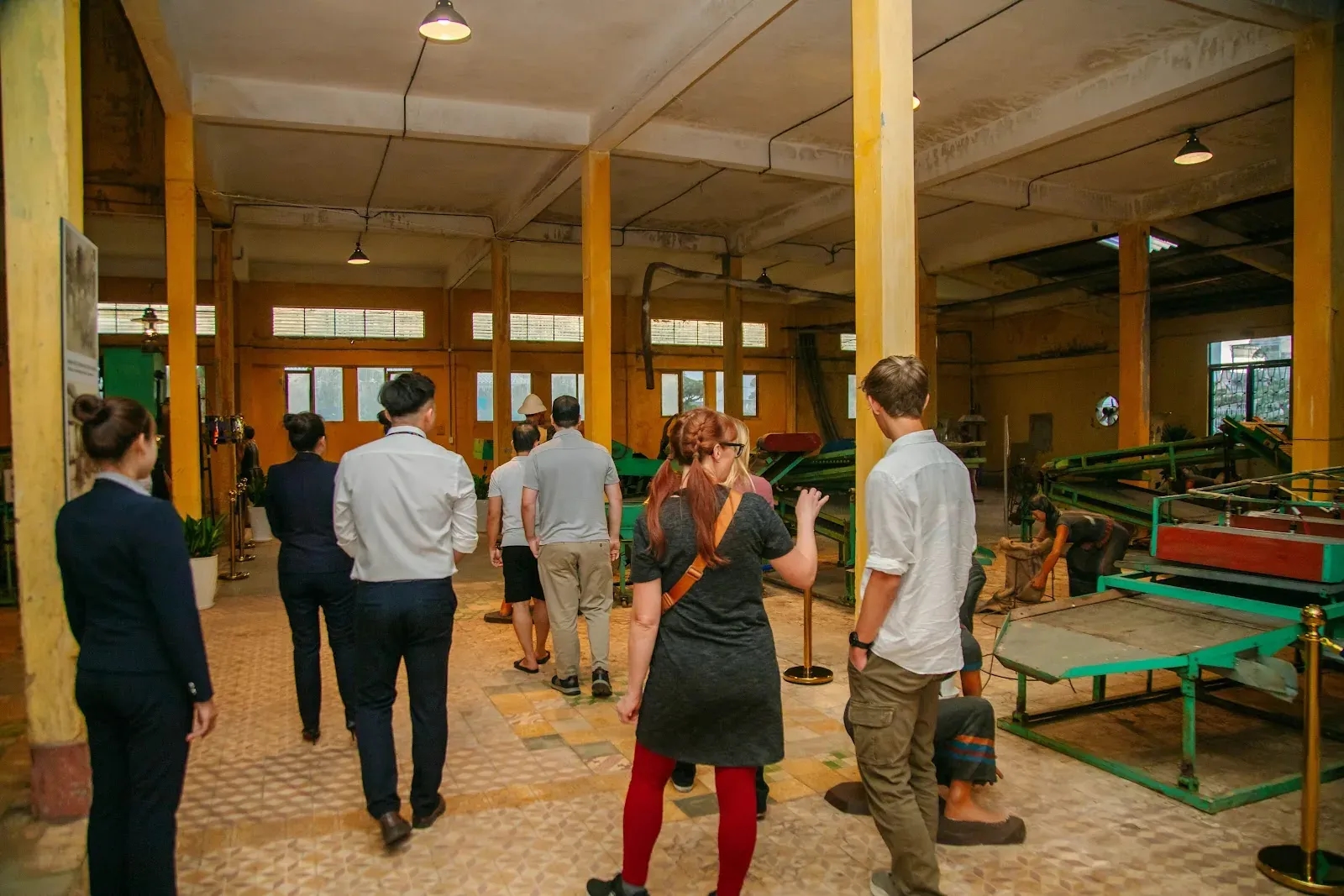
A Visitor's Guide to the Old Tea Factory in Bao Loc
What to bring, what to see and how to behave when visiting the 1927 Tea Factory: a practical guide to enjoying the historic workshops, the Ngu Thuc Viet Tra tea space and the teaware showroom.
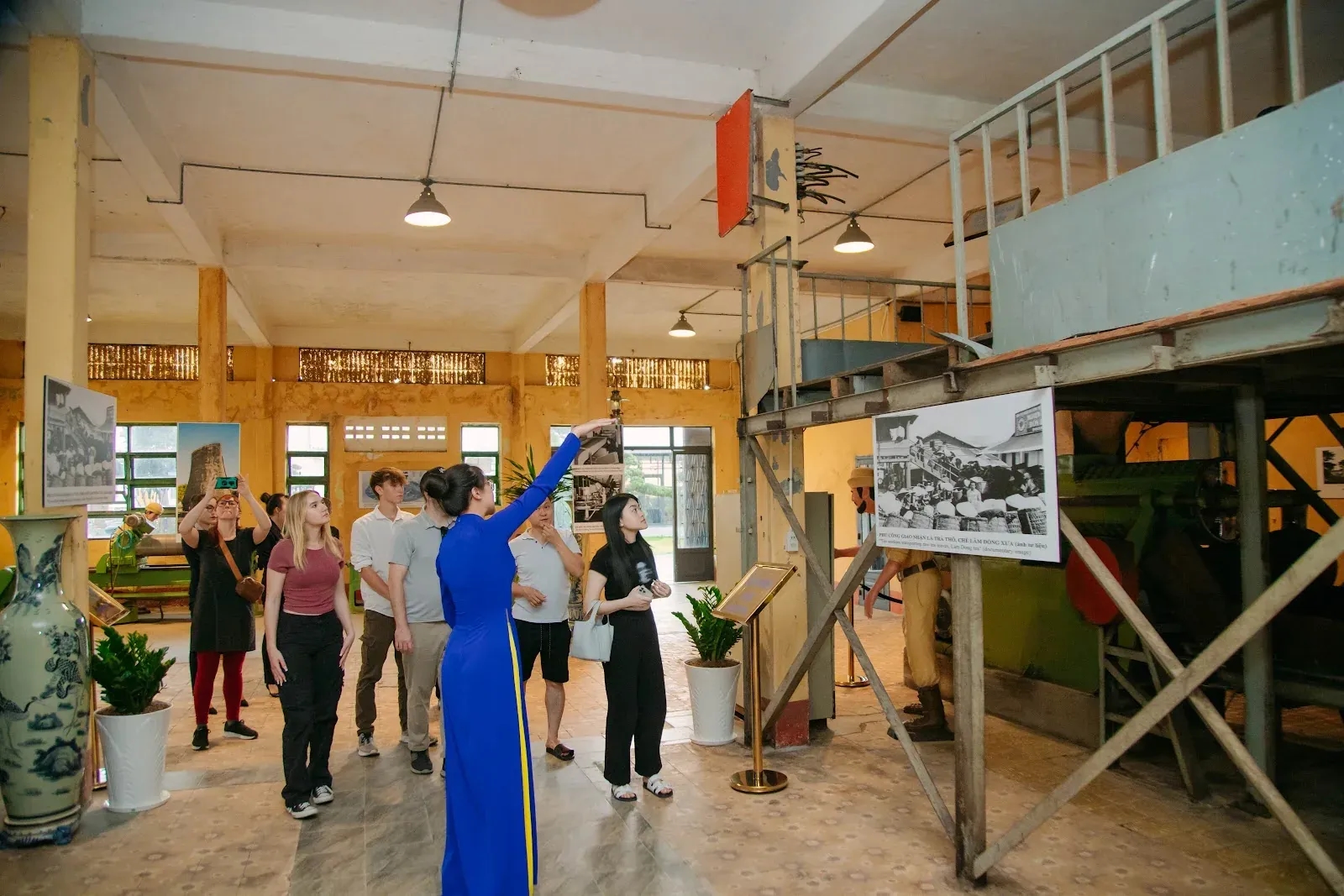
Reading History Through the Paintings of the 1927 Tea Factory
Beside the old machines, a series of illustrated paintings and black-and-white archive photos helps visitors picture the life of tea making. A few tips on reading them for a richer visit.
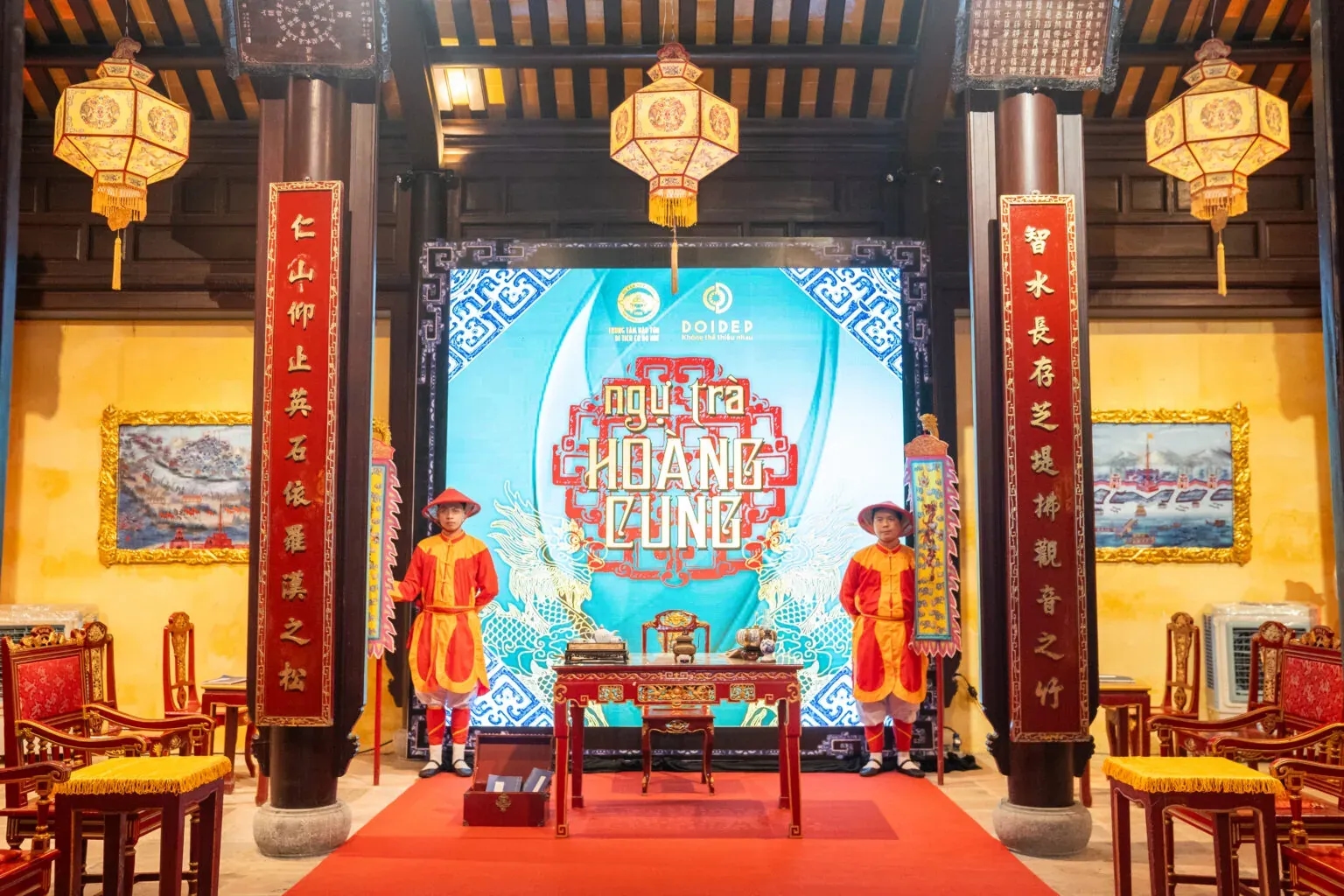
The Imperial Royal Tea Ritual in Vietnamese Culture
At Festival Hue 2025, the Hue Monuments Conservation Center and the Doi Dep brand restored the Imperial Royal Tea ritual, recreating the refined tea-enjoyment tradition of Vietnam's kings and lords of old.