
The Art of Tea Drinking in Vietnam
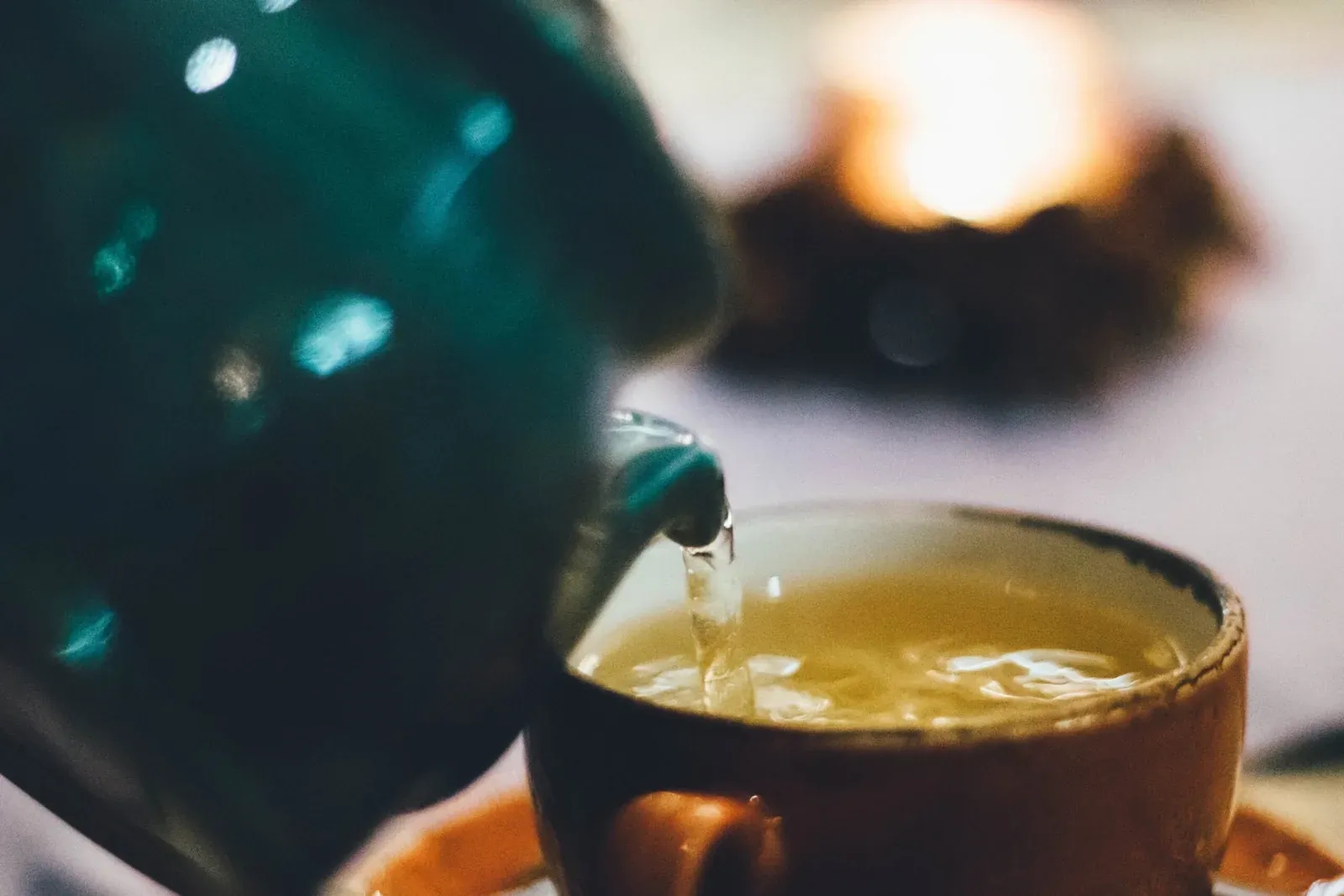

Tea has been a familiar drink for Vietnamese people for generations, making the art of tea drinking a distinctive part of Vietnam's tea culture. Tastes vary, but drinking tea is about much more than the tea itself.
Tea has been a familiar drink for Vietnamese people for generations, so the art of tea drinking has become a distinctive feature of Vietnamese tea culture. People enjoy tea in many different ways, but drinking tea is not simply about taking a sip and judging whether its flavor is rich enough; the art of tea drinking also depends on many other factors.
1. The cultural space of Vietnamese tea drinking:
Flexible by nature, Vietnamese people enjoy tea in a wide variety of settings. Anyone can drink a refreshing cup of fresh green tea anywhere – at a bus station, a train station or a market gate – in a relaxed, unpretentious way.
That does not mean, however, that Vietnam lacks elegant and elaborate spaces for enjoying tea. Vietnamese people often invite guests to their homes to enjoy tea, showing hospitality and closeness and making it easy to chat and share confidences.
Depending on each family and the layout of the home, the tea corner may or may not have a fixed place. Those who love open, airy spaces with fresh, cool air sit on the veranda or in the courtyard, under a roof where they can relax at ease. Those who love a warm atmosphere of togetherness find the family dining table or the guest table an ideal spot for enjoying tea.
This very flexibility means that the Vietnamese tea corner has no fixed form and is not confined to a tea room. Vietnamese tea spaces commonly share 3 characteristics:
An open space: open in people's hearts and open in the manner of welcoming guests, meaning it can be freely adapted, creating a flexible structure in the spirit of modern architecture: green, economical and pure materials.
A tranquil space: tea drinking cannot be noisy; there is no need for a solemn tea room, but there must be a little stillness and purity for the soul.
A rustic space: friendly materials such as bamboo, wood, brick and ceramics offer far more warmth than cold modern materials. There is no need for meticulous detailing such as carved column heads and door frames, nor for anything overly somber and nostalgic or garishly colorful decoration.
2. Tea ware:
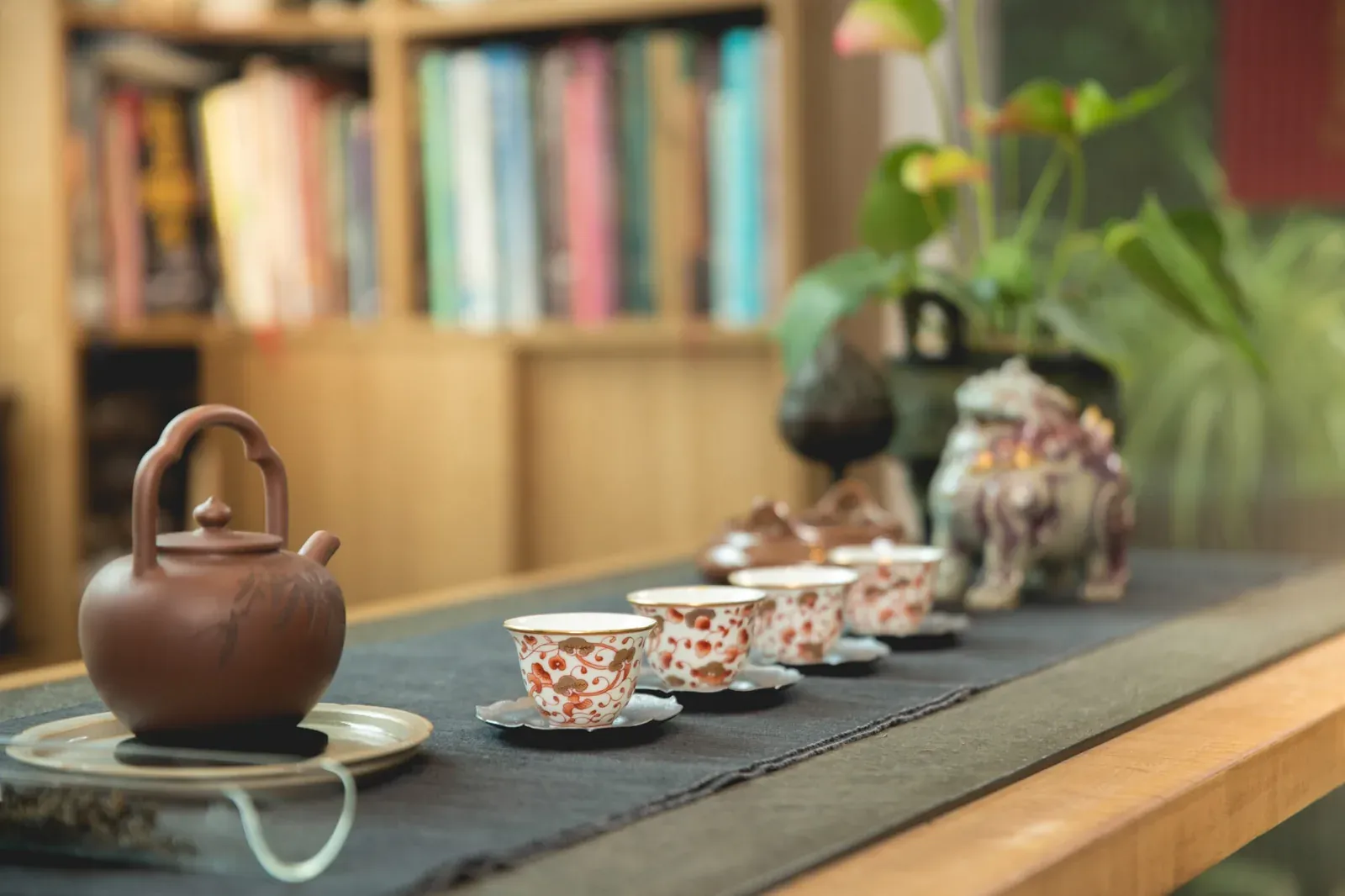
In the Vietnamese art of tea drinking, tea ware – the utensils used to brew tea – is also somewhat elaborate.
In the past, teapots had to be made of clay with cinnabar (a chicken-liver color), small and pretty, just enough for one round of tea. In shape, teapots came in several main styles: pear, areca nut, persimmon or wheel. Teacups also came in many types: the tall, tapered Tong cup and the low, wide Quan cup.
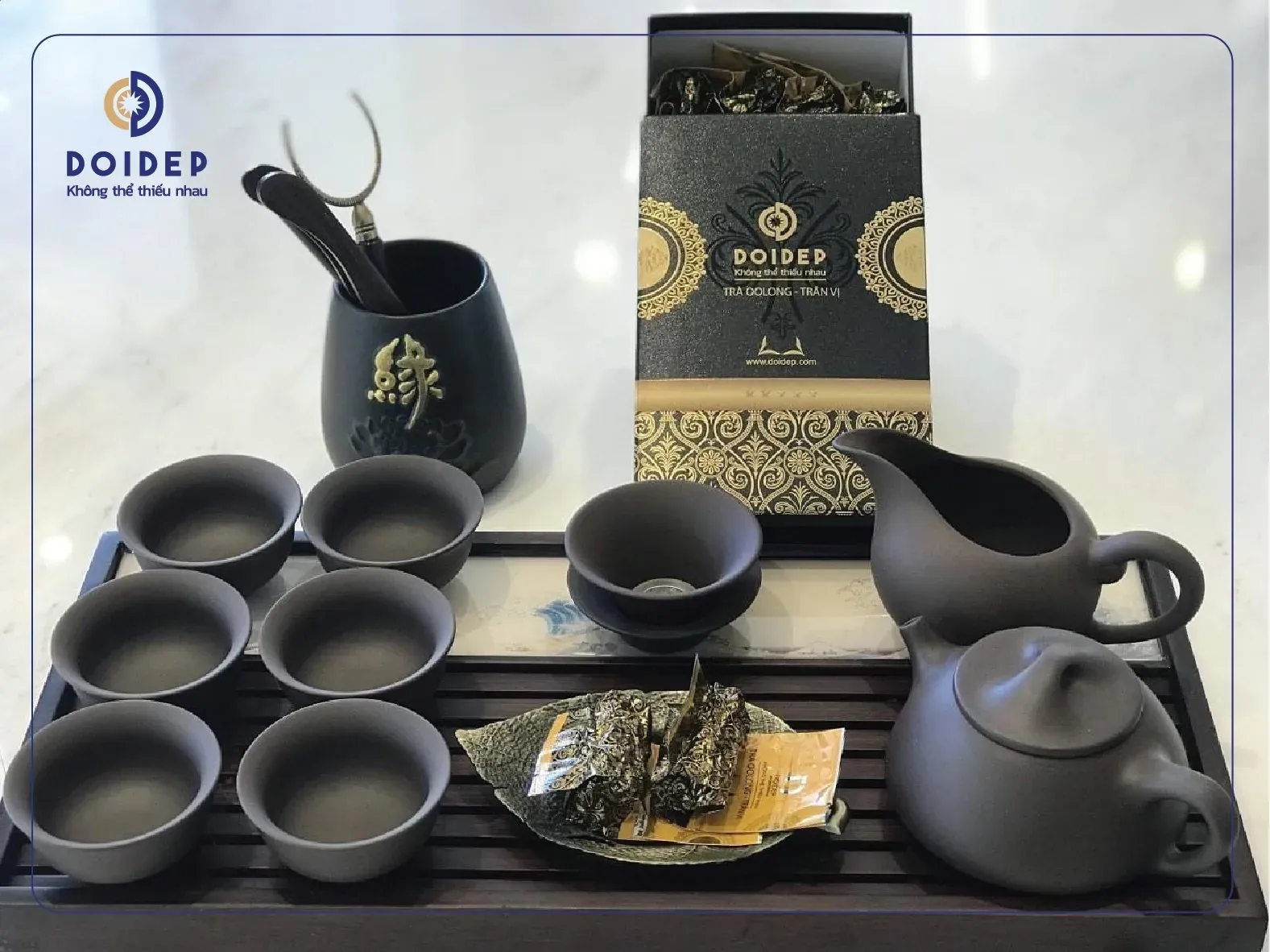
Today, the art of brewing tea is simpler and less elaborate. Tea ware may be pared down, but the traditional pieces remain. A basic tea set today includes: a teapot, teacups (the Tong cup, Quan cups and a lidded tea bowl), and other utensils such as a tea tray, a tea caddy, a set of tea tongs, a tea scoop, a tea strainer and a kettle.
3. How to brew tea:
For Vietnamese people, making tea is very simple: just put the tea in the pot, rinse it with boiling water and wait a few minutes, and it is ready to drink. When elevated to the art of tea drinking, however, it becomes a little more elaborate.
Before brewing, the teapot must be rinsed thoroughly and boiling water poured evenly over the small cups. Only after rinsing the pot should the tea be added, scooped with a wooden or bamboo spoon; a metal spoon should not be used to scoop tea.
For the first pour, add a little boiling water to rinse the leaves and then discard it, which is considered washing the tea. Then pour in boiling water and let the tea steep for a few minutes before pouring all of the tea out into the cups; if you want to drink more, add more boiling water to the pot.
Pouring out all of the tea before adding fresh water keeps the leaves from going soggy, so they retain their flavor without becoming too strong.
4. How to drink tea:
In the art of drinking and enjoying tea, Vietnamese people are graceful and flexible – not overly elaborate, yet not too simple; not overly ceremonial, yet not too rustic.
Since ancient times, the forebears who were well versed in the art of tea drinking have said: tea yields many infusions; the first is the infusion of a young maiden, pure and sweet; the second is the infusion of a young wife, rich, ardent and profound. That is truly the finest infusion, its aftertaste lingering in the throat.
Tea should be poured into small cups, and the type of cup can be chosen to suit the weather of the four seasons. Vietnamese people enjoy tea everywhere and with everyone, and it reflects the Vietnamese culture of social conduct. The young brew tea for their elders, and women brew tea for men.
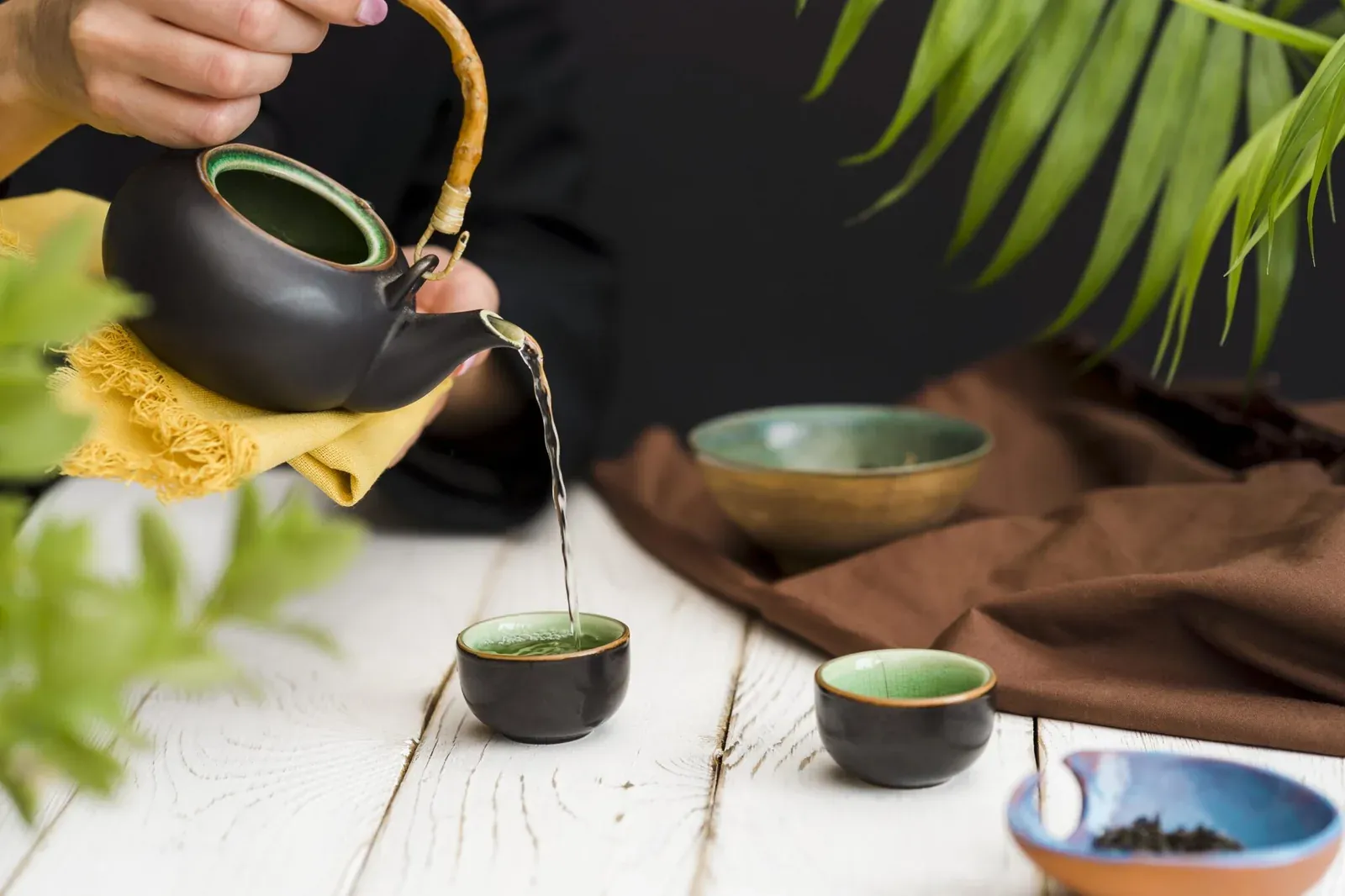
To offer a cup of tea properly, the middle finger supports the base of the cup while the index finger and thumb hold its rim, and both the person offering and the person receiving the tea bow their heads respectfully. Tea is drunk in small sips, savored slowly to appreciate its full sweetness. Offering and drinking tea also express refinement and sincerity, a wish for harmony and for setting aside suspicion and envy. Enjoying tea is a time for the mind to be still and at peace.
Source: DOIDEP
Relevant posts
Tea and Slow Living: Learning to Pause Over a Cup
In a hurried world, a slowly brewed pot of tea can become a precious pause. Ideas for turning tea into a slow-living ritual, whether you drink alone, with one friend or around a table of loved ones.
Water and Temperature: The Two Quiet Secrets of a Good Pot of Tea
The same leaves can taste completely different with another water or another temperature. A practical guide to choosing water, matching heat to each style of tea and brewing a rounder cup at home.
Why You Should Drink Tea Every Day – The Secret to a Healthy and Carefree Life
Amid the pressures and rush of modern life, many people turn to simple habits that greatly benefit body and mind. One increasingly popular habit is drinking tea every day.